
Guide
Copper hammers: when to use one, and how to choose
A copper hammer is a soft face hammer: it strikes firmly but gives way before the part does. Here is when to reach for one, how copper compares with brass, nylon and dead-blow hammers, and what to look for when you buy.
By Tomstroj d.o.o. ·
What a copper hammer is for
A copper hammer — sometimes called a copper mallet — is built for soft-face striking. The copper face is softer than hardened steel, so when it meets a bearing race, a shaft end or a machined surface, the copper deforms first and the part keeps its shape.
That makes it the hammer for assembly and alignment: seating bearings and bushings, tapping workpieces into a vice, driving dowel pins, nudging a housing into line or freeing a seized part without leaving a mark. It is also why copper is often called a bearing hammer in maintenance workshops.
Copper vs brass vs nylon vs dead-blow
Soft face hammers trade hardness for protection. The softer the face, the less it marks — and the less force it transmits.
| Face hardness | Marking risk | Rebound | Typical use | |
|---|---|---|---|---|
| Copper | Soft metal | Low | Low | Bearings, shafts, pins, assembly and alignment |
| Brass | Harder than copper | Low to medium | Medium | Drifts and punches on softer steels, general maintenance |
| Nylon / plastic | Soft polymer | Very low | Medium to high | Sheet metal, finished and painted surfaces, light assembly |
| Dead-blow | Polymer shell, shot-filled | Very low | Very low | Seating parts where bounce-back must be avoided |
Copper sits in the middle: it transmits more of the blow than nylon or rubber, marks far less than steel or brass and has little rebound.
Copper vs steel
Next to a standard workshop hammer
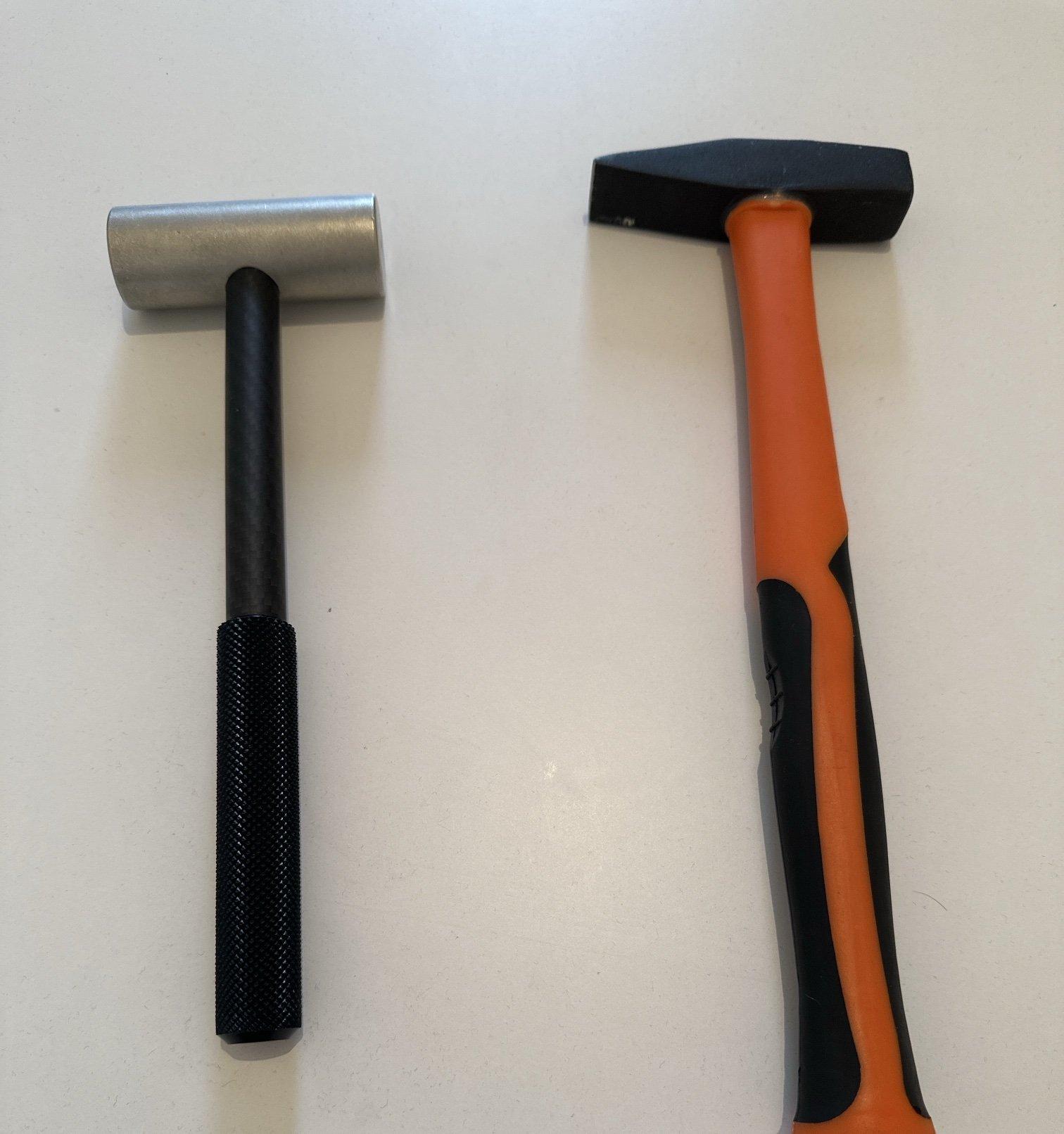
| Premium Hammer | Standard steel workshop hammer | |
|---|---|---|
| Head | Copper, tin-plated | Hardened steel |
| Marks the part | Copper face gives way first; bearings, shafts and finished surfaces keep their shape | Can dent bearings, shafts and finished surfaces |
| On impact | Copper does not spark | Steel on steel can throw sparks |
| Handle | Aluminium carbon shaft | Fibreglass core with plastic or rubber sleeve |
| Grip with oil or water | Machined knurling keeps traction | Smooth sleeves can go slippery |
| Storage | Optional hard case with foam | None |
| Best for | Assembly, alignment, seating parts, precision work | Punches, chisels, nails, general heavy striking |
| Price | €45 / €65 excl. VAT | Usually less |
Does copper spark?
Copper does not produce the hot sparks steel does when struck, which is why copper tools are used near flammables. People often search for a "non-sparking hammer" for exactly this reason.
But certified tools for explosive atmospheres are tested and approved separately; a copper hammer is not automatically approved for Ex-zones. Check your site's explosion-protection document before you use any hammer in a hazardous area.
Choosing a weight
- 300–500 g for fine assembly: small pins, instrument housings, light alignment.
- 500–800 g for general workshop use: bearings, bushings, vices and fixtures.
- 1 kg and more for heavy seating: large bearings, couplings and big housings.
At 620 g, Premium Hammer sits in the general-workshop range.
Handle materials
- Wood (ash, hickory): light and warm in the hand, but varnished wood slips in oil and can loosen as it dries out.
- Fibreglass: durable and damping; usually covered in a rubber or plastic sleeve that can go slippery in oil.
- Composite: glass- or carbon-reinforced polymer, often with an elastomer grip; behaviour in oil varies with the grip.
- Aluminium carbon: a stiff, light shaft that keeps the weight in the head; with a knurled metal grip it holds in oil, emulsion and water.
Caring for a copper hammer
Copper is meant to give, so the face will mushroom with use. Keep the head clean and dry. Dress light burrs and mushrooming with a file to restore a flat face.
Replace the hammer — or the head, where the design allows — when the face is badly deformed, cracked, or the head loosens on the handle.